The Rise of the Food Hall and Why Getting the Bar Right Matters
The UK food hall sector is in the middle of a remarkable run. While the broader hospitality industry has faced well-documented pressure from rising costs, wage inflation and declining footfall, food halls have done something quite different. They have kept growing. According to hospitality consultancy Next Phase, the number of food halls operating across the UK grew by 26% between 2024 and 2025, with a further 65 venues currently in development.
Food halls are built around how people want to socialise. A group can arrive without needing to agree on a single cuisine, share a table without sharing a booking and stay for as long as they like without feeling pressure to move on. That kind of freedom is increasingly rare in hospitality, and consumers are responding to it.
What is also notable is where this growth is happening. The Next Phase report points to a clear shift away from London and major cities, with food halls increasingly appearing in regional towns as part of wider regeneration schemes, often housed in converted heritage buildings and supported by public funding.
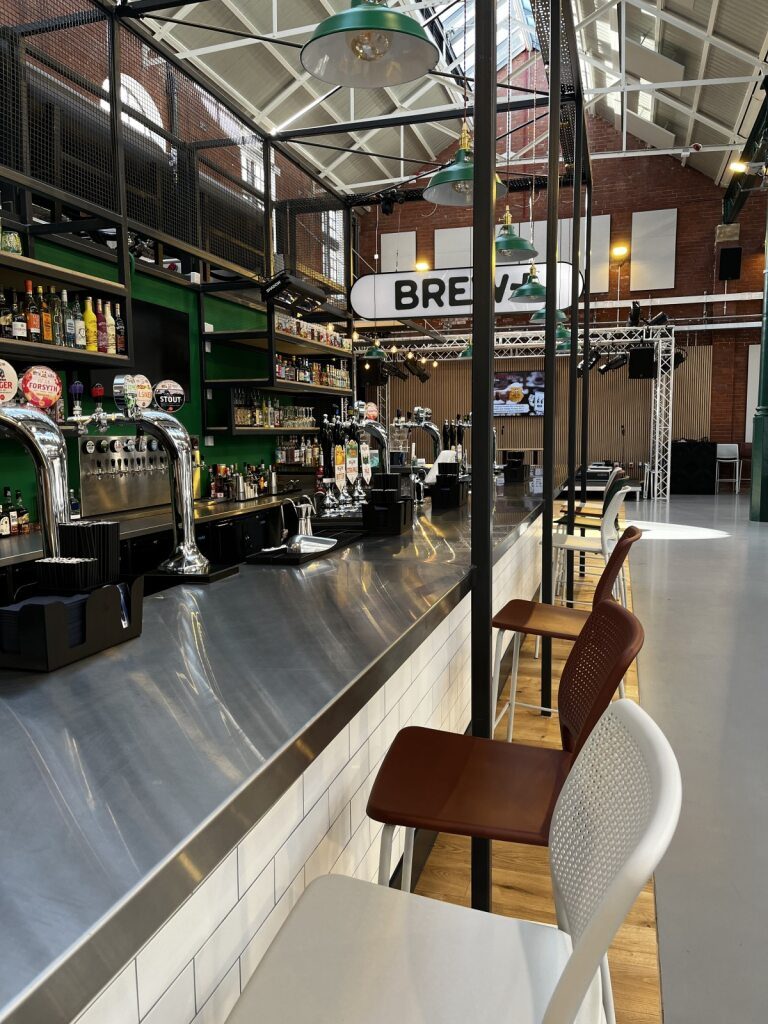
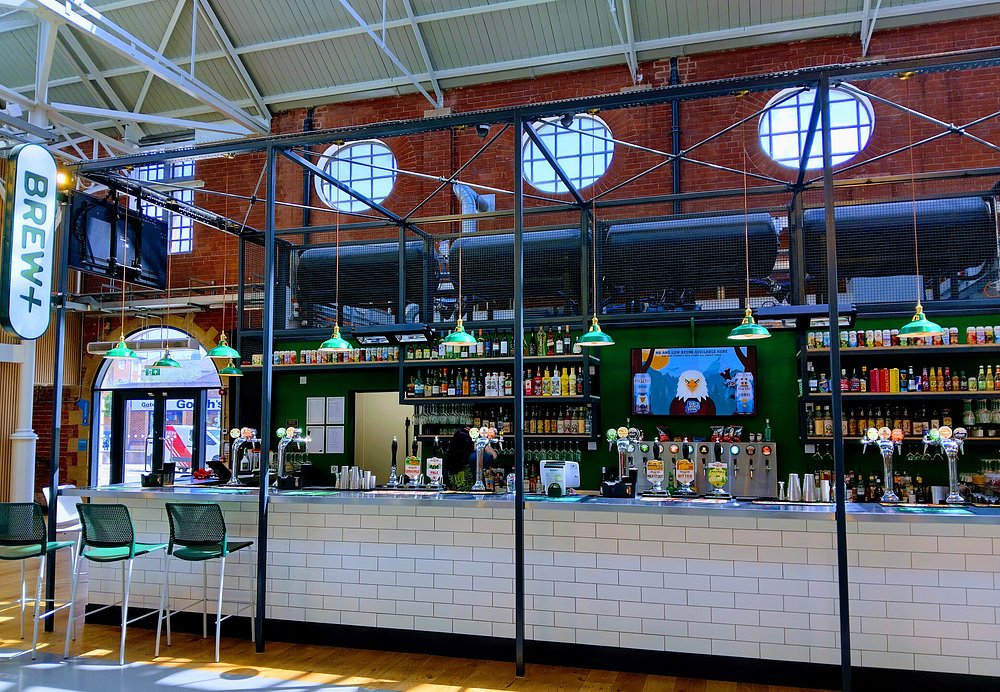
Goole is a good example of that trend in action. Brew York, the York-based independent brewery, reopened the town’s historic Victorian market building in April 2025 under its Brew+ brand, following a £4m restoration funded through the Goole Town Deal programme. The building had been closed since 2019, costing the local council over a thousand pounds a month to maintain while its condition worsened. The new venue brings together craft beer, four street food vendors and a live music programme under one roof. It has created more than 35 jobs and is seen as a catalyst for the town’s wider regeneration.
Servaclean was involved in the project, supplying and installing the underbar system for the venue.
The Operational Challenge
Running a food hall bar is more operationally demanding than it might appear, and quite different to a conventional pub or restaurant setup.
A typical food hall bar has to handle high and unpredictable footfall, often across extended hours and multiple events. The drink offer tends to be broad, with craft beer, guest taps and a range of other categories all needing to be served quickly and consistently. Where food vendors are also operating nearby, the bar layout has to work around service flow that can shift throughout the day. In a heritage or converted building, the physical constraints of the structure add another layer of complexity. A Victorian market hall or a repurposed warehouse will rarely suit a standard off-the-shelf solution.
Goole Market Hall is a case in point. As a listed Victorian building repurposed as a multi-operator hospitality venue, it presented the kind of structural and logistical constraints that a standard solution would not have addressed.
This is where the planning work matters most. Getting the underbar layout right in a food hall environment is not simply a case of specifying equipment and fitting it on installation day. It requires understanding how the bar needs to operate across different service periods, how the layout will interact with foot traffic and where drainage and services can realistically be positioned. All of that needs to be resolved before installation, not on the day.
Servaclean’s approach starts well before any equipment is specified. Every project begins with a detailed briefing process that captures the operating requirements of the venue, covering service flow, capacity, product range and staffing. Only then are any recommendations made.
Complimentary BARPlan CAD drawings then show exactly how the bar will function, with every fitment positioned to maximise workflow efficiency. Throughout the project, Servaclean works directly alongside architects, main contractors and site teams, acting as a single point of contact rather than leaving the client to coordinate between trades. For a project like Goole Market Hall, where a historic building was being brought back into use as a multi-operator hospitality venue, that kind of coordinated delivery is essential.
Manufactured for the Long Term
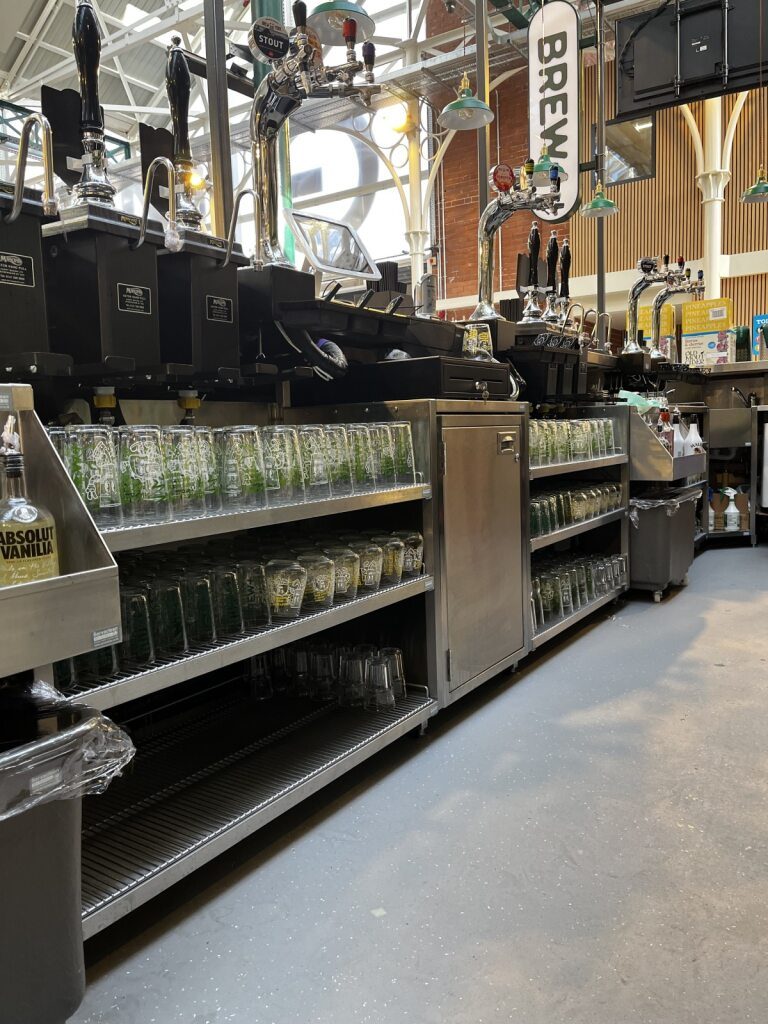 Food halls are not static operations. Traders change, events programmes grow and the offer develops over time, which means the bar system needs to be able to keep up.
All Servaclean BARFrame systems are manufactured using food-quality 304 grade stainless steel, with bespoke capability included as standard and every product backed by a five-year guarantee. The modular design means that as a venue grows or changes, the bar can be adapted or extended rather than replaced entirely.
For operators and developers working on food hall projects, the underbar system is one of the decisions that will shape how the venue operates long term. Getting it right from the start, with the planning, the coordination and the manufacturing quality to back it up, is what Servaclean does.
To find out more about how Servaclean can support your food hall project, get in touch with the team.